Revd Dr Peter S Heslam, Director of Faith in Business and CCCW Research Associate.
Insights from the Faith in Business Leadership Retreat (Westminster College, Cambridge, 24-25th April 2026)
Leadership today is in flux. Traditional hierarchies are weakening, trust in institutions is fragile, and the misuse of authority has left many people suspicious of power. Yet power and influence are not inherently dangerous. They are God-given. Their impact depends on how they are used.
Across the six sessions of this retreat, a clear message emerged: responsible leadership is rooted in humility, shaped by the character of God, and expressed through influence more than position.
Power and Influence: Neutral Forces with Transformative Potential
The retreat opened by distinguishing power from influence. Power is the capacity to direct others’ behaviour and is derived from formal authority. Influence, on the other hand, is the ability to cause an effect indirectly through persuasion, inspiration, or guidance. As both are morally neutral, they can be used for good or ill.
One speaker shared a story from her time as a CFO during organisational turmoil. The team was competent but fractured. Through regular meetings centred on mission and shared purpose, trust grew. Eventually, the team identified each other’s “superpowers” (special giftings or charisms). This transformed collaboration. The challenge, then, is to identify your superpower/s, recognise the superpowers of others, and then to combine them to strengthen your workplace culture.
This strategy fits well with the wider shift in the world of work alluded to at the start of this blog. Younger generations lead through ideas, networks, and credibility rather than titles. Leadership is increasingly about value, insight, and trust rather than positional authority.
Safeguarding: A Core Expression of God‑Honouring Leadership
Wherever power exists, the potential for abuse exists alongside it. Safeguarding, therefore, is not peripheral but “a core concern for God.” Scripture is full of stories showing the consequences of unaddressed abuse – from Eli’s failure to restrain his sons to the suffering of Tamar and Dinah.
Safeguarding is a shared responsibility, rooted in the priesthood of all believers. It requires courage to intervene, humility to listen, and a commitment to protect the vulnerable even when it is costly.
A striking theme in this discussion was the role of lament. Lament acknowledges suffering while holding onto hope – “life sucks but it shouldn’t”. In avoiding despair and superficial optimism, lament allows communities to face trauma without losing sight of God’s healing.
Safeguarding also demands listening to marginalised voices, especially from women, ethnic minorities, people with low social standing, and people with disabilities. When these voices are suppressed, a community’s self-understanding is warped.
Servant Leadership: Power Reimagined Through Jesus
In the upper room of John 13, Jesus – fully aware that “the Father had given all things into his hands” – chose to wash his disciples’ feet. This was not weakness but deliberate, self‑giving strength.
In reflecting on the foot washing narrative, three subthemes emerged:
Leadership is not only strategic; it is embodied. It involves attentiveness and prioritising the wellbeing of others.
Leaders empower others by modelling what they expect and by giving away opportunities. The main speaker recalled being entrusted with a major presentation as a junior programmer – an act that shaped his confidence and his career trajectory.
- Leadership as Connecting to Vision
People thrive when they see how their everyday tasks contribute to a larger mission. Leaders help others see purpose in their work, even in seemingly ordinary roles.
Honour also emerged as a vital leadership virtue. Positioning oneself to bring out the best in others, grounded not in performance but in the image of God, is crucial.
Influence Over Position: Lessons from Paul and Barnabas
Case studies in servant leadership can be found in the stories of Paul and Barnabas. Paul held no formal office, yet his influence was immense. It was rooted in divine calling, relentless effort, suffering, theological depth, and persuasive skill. Barnabas, by contrast, embodied quiet, enabling leadership. No words of Barnabas have ever been recorded. But his encouragement of Paul (on whom Luke’s ministry was dependent), and of John Mark, helped give rise a large portion of the New Testament, including Paul’s epistles, Acts, and the Gospels of Luke and Mark.
Barnabas’s enormous legacy is a reminder that leadership is not always front‑facing. Sometimes the most transformative leaders are those who see potential in others well before anyone else does.
Responsible Leadership in a Complex World
Broadening the lens, what lessons can be drawn from Joseph and Boaz in the Hebrew Bible, from female preachers today, and from business leaders in recent history?
Joseph’s story illustrates both the beauty and danger of power. Though empowered by God, he also participated in the enslavement of Egyptians. It is a reminder that even well‑intentioned leaders can cause harm when humility falters.
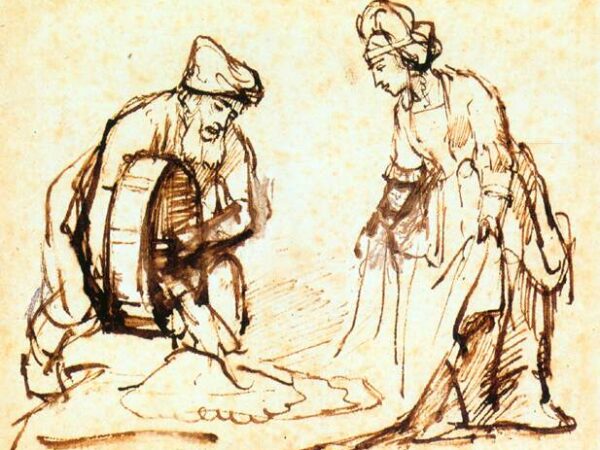
Boaz, by contrast, models integrity in a culture which, like our own, is rife with misogyny. He protects Ruth, refuses to exploit her vulnerability, and follows due process even if it comes at a personal cost (he was willing to lose Ruth to another relative). In a world wrestling with toxic masculinity and the rise of the ‘manosphere’, Boaz offers a counter‑narrative of honour, restraint, and justice.
Misogyny is also one of the challenges women face in preaching today, along with overly critical scrutiny, and the pressure to conform to preaching patterns developed by men. Women flourish when encouraged and trusted (especially by men), and when they are released to preach with creativity, vulnerability, and authenticity.
The life of Sir Kirby Laing (1916-2009) provides an inspiring example of multi‑dimensional influence that extended far beyond his formal positions as a civil engineer in business. That influence was invariably thoughtful, enabling, generous, and far‑reaching.[1]
Finishing Well: The Fragility of Leadership
The retreat closed with a sobering warning. Paula Vennells and King Solomon both began with promise but ended with damaged legacies. Even gifted Christian leaders can “go seriously astray”. They can allow power, wealth, ego, or lack of concern about the suffering of others, to eclipse integrity.
Christian leadership must reflect the being, nature, and character of God. The true litmus test is the fruit of the Spirit: love, joy, peace, patience, kindness, goodness, faithfulness, gentleness, and self‑control. The key to manifesting this fruit is obedience to God, even when we do not understand God’s ways. It will involve seeking to belong to, and serving, the communities in which God has placed us.
A Final Call
Across all sessions, one truth rang clear: leadership is a sacred trust. Whether we hold formal authority or exercise quiet influence, we are called to steward power with humility, courage, and love. We are called to safeguard the vulnerable, elevate others, and pursue God’s purposes above our own. This will not always be easy, but it is the pathway to freedom and joy for all those involved across the globe in Christian leadership, whether inside or outside the church.
[1] The talk on Sir Kirby was given by Dr Ian Randall, a CCCW Research Associate, who has recently written a biography on Laing.